 Chunlei Mining Machinery

Sand Making Machine
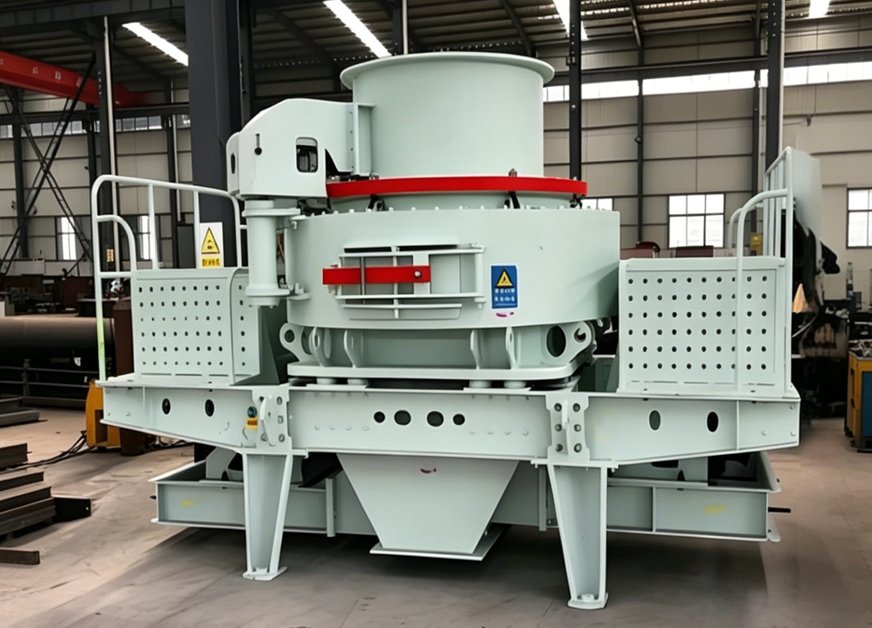
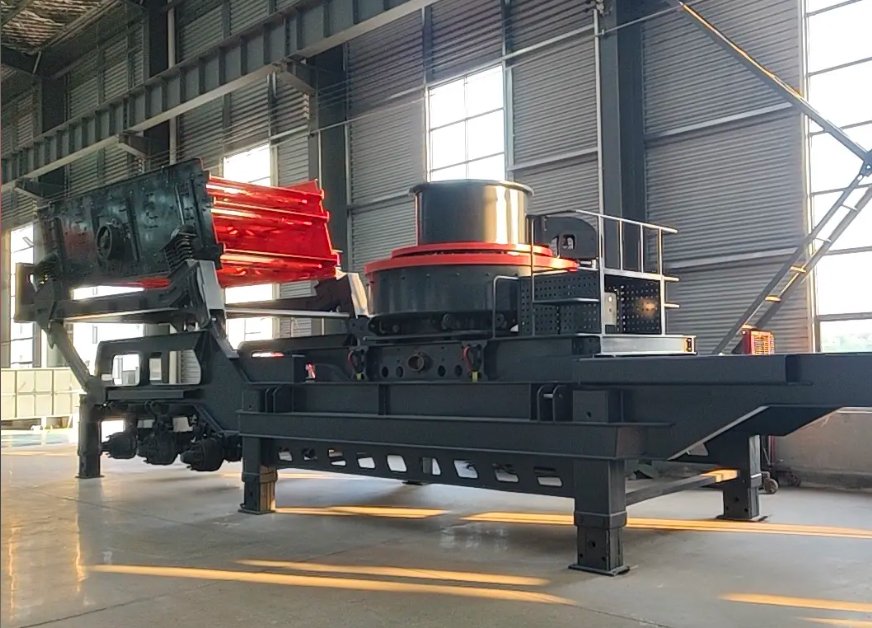
- Sand making machine is also called impact crusher, compared with the traditional sand making machine has a deep cavity impeller, throughput increased by 33%, peripheral guard plate up and down can be turned around, long service life, the combination of throwing head, reduce the cost of 35%, the center and peripheral feed, flexible adjustment, easy to convert and other advantages.
- Feed size:<55 mm
- Capacity:80-650t/h
- Applicable materials: river pebbles, granite, basalt, iron ore, limestone, calcite, quartzite, pyroxene, weathered rock, calcite, coal, manganese ore and so on.
What is Sand Making Machine?
The impact sand making machine (vertical shaft impact crusher) is a core piece of equipment in the fields of sand and gravel aggregate processing and ore shaping, and is particularly suitable for the sand-making and shaping of high-hardness materials such as basalt, granite, and river pebbles. It utilizes the “stone-on-stone” or “stone-on-iron” impact principle to crush hard rock materials into sand that meets construction sand standards (0–5 mm). Its core operating principle is as follows: Material enters the high-speed rotating rotor through the feed inlet and is projected onto the anvil blocks or material lining in the crushing chamber. Through repeated impacts, grinding, and shearing, the material is crushed, and the qualified finished product is ultimately screened out by the screening system.
While traditional jaw crushers and cone crushers can only perform primary or secondary crushing, the impact sand-making machine directly addresses the dual requirements of “sand production and shaping.” It combines excellent product particle shape, low operating costs, and stable production capacity, and is suitable for both wet and dry processing modes. It serves as a core component in manufactured sand plants, construction aggregate production lines, and mine tailings recovery projects.
Why Are More and More Aggregate Producers Choosing Sand Making Machines?
With the continuous growth of market demand, aggregate producers are increasingly opting for impact-type sand making machines as the core sand-making equipment in their production lines. Compared to traditional sand-making equipment, these machines produce rounder, higher-grade aggregates that effectively meet the requirements for high-quality aggregates in concrete and asphalt mixing plants, as well as large-scale infrastructure projects.
Additionally, impact sand makers are not only suitable for high-hardness materials such as granite, basalt, and river pebbles, but they can also shape the finished aggregates, thereby enhancing their overall market value.
Modern models have optimized rotor structures and reduced wear on vulnerable components, effectively lowering operating costs. For aggregate producers seeking high-quality sand, the impact sand maker is undoubtedly a critical choice.
Why is the impact sand-making machine the top choice for hard rock sand production?
The impact sand-making machine is the only hard rock processing equipment capable of simultaneously performing “sand production and shaping.” While jaw crushers and hammer crushers can break hard rock, the resulting product contains a high proportion of needle- and flake-shaped particles, failing to meet the demands of high-end construction. In contrast, the impact sand maker precisely controls the particle shape of the final product through adjustable rotor speed and optimized chamber design—a core advantage that cannot be replicated by other equipment.
The adaptability and cost-effectiveness of the impact sand maker are demonstrated by:
- Wide range of material compatibility: Capable of processing over 10 types of hard rock, including granite, basalt, diabase, river pebbles, and tailings, with a compressive strength of up to 350 MPa;
- Superior energy efficiency: Compared to hammer-type sand makers, energy consumption per unit of finished sand is reduced by 25%, and the service life of wear parts is extended by 1–2 times;
- Higher Premium on Finished Product: Cubic-shaped finished sand commands a price premium of 10–30 RMB per ton over ordinary sand; a production line with an annual capacity of 1 million tons can generate additional revenue of 10–30 million RMB.
We will first analyze your raw materials—including hardness, moisture content, and silt content—to match the appropriate model and material, providing one-on-one customized service. Get your free proposal now.
What are the differences between impact sand makers, hammer sand makers, and impact crushers?
All three types of equipment can be used in sand and gravel aggregate production, but they differ in their operating principles, suitable materials, and final product quality. For manufactured sand production, the impact sand maker is the top choice for specialized sand-making operations; the hammer sand maker is better suited for small-scale projects involving materials of medium to low hardness; while the impact crusher is primarily used for secondary crushing and shaping, and in some cases can also serve as a sand-making machine.
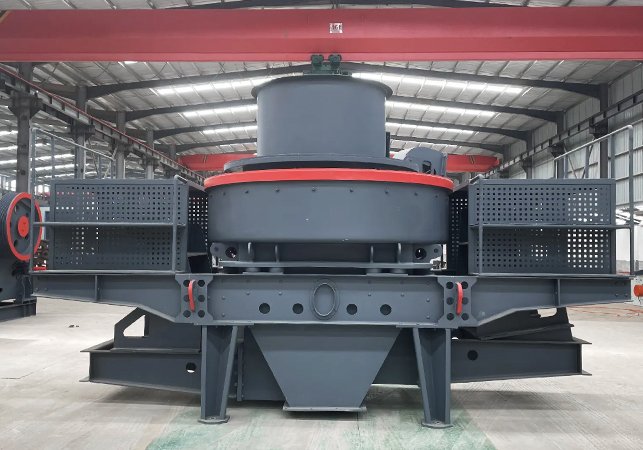
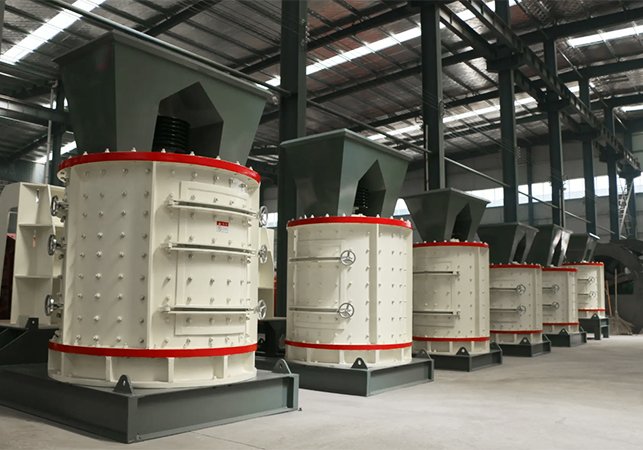
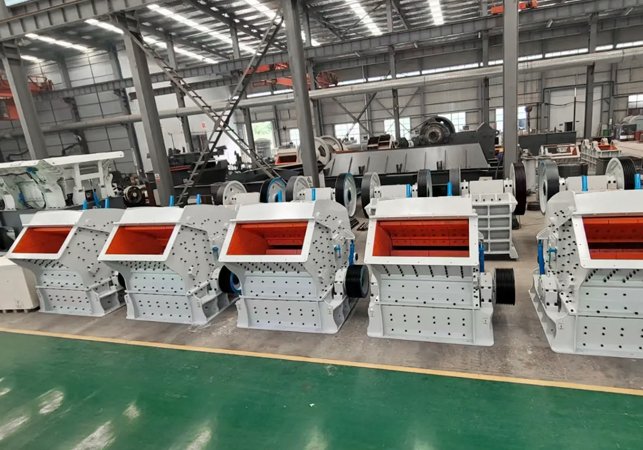
There is no single “best” choice when selecting equipment; the key is to make a comprehensive decision based on material hardness, production capacity requirements, finished product quality standards, and investment budget.
| Comparison Item | Impact Sand Maker | Hammer Sand Maker | Impact Crusher |
| Primary Application | Specialized Sand Making & Shaping | Crushing + Sand Making | Secondary Crushing & Shaping |
| Applicable Materials | Granite, Basalt, River Pebbles, Limestone, etc. | Medium-to-Low Hardness Materials (Limestone, Coal Gangue, etc.) | Limestone, Construction Waste, Medium-to-Low Hardness Stone |
| Material Hardness Adaptability | ★★★★★ | ★★☆☆☆ | ★★★☆☆ |
| Finished Product Shape | Cubic particles; excellent shape | Average shape | Good shape |
| Manufactured Sand Quality | ★★★★★ | ★★★☆☆ | ★★★☆☆ |
| Fines Content Control | Excellent | Average | Average |
| Wear Parts Lifespan | Relatively Long | Relatively Short | Moderate |
| Processing Capacity | High | Moderate | High |
| Energy Consumption Level | Moderate | Relatively Low | Moderate |
| Long-term Maintenance Costs | Moderate | Relatively High | Moderate |
| Applicable Production Lines | High-Quality Manufactured Sand Production Lines | Small-Scale Sand Making Projects | Aggregate Crushing Production Lines |
Working Principle of the Impact Sand Making Machine
The impact sand making machine (VSI Sand Making Machine) employs the “stone-on-stone” or “stone-on-iron” crushing principle. It uses a high-speed rotating rotor to subject the material to powerful impacts, thereby achieving the three functions of crushing, shaping, and sand production.
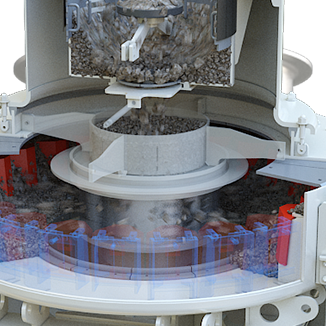
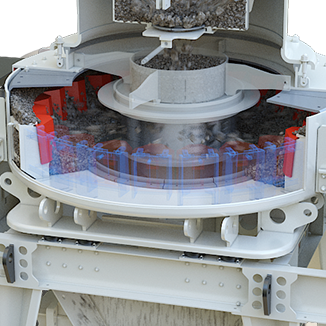
During operation, the material falls through the feed inlet into the interior of the high-speed rotating rotor. Under the action of centrifugal force, the material is ejected from the rotor at extremely high speeds, colliding violently with the liner plates or other material. After repeated impacts, friction, and crushing, the material ultimately forms manufactured sand with uniform particle size and excellent particle shape.
Unlike traditional compression-type crushing equipment, the impact sand making machine utilizes high-speed impact to achieve crushing, resulting in cubic-shaped particles that better meet the requirements for concrete, asphalt, and high-standard construction sand. The equipment also features aggregate shaping capabilities, effectively enhancing the value of sand and gravel products.
By adjusting the rotational speed, feed rate, and crushing mode, the impact sand maker can meet the output and finished product particle size requirements of various rock types and manufactured sand production lines, making it one of the most widely used sand-making machines in modern sand and gravel aggregate production lines.


Structure of the Impact Sand-Making Machine
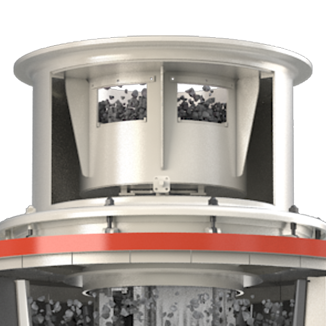
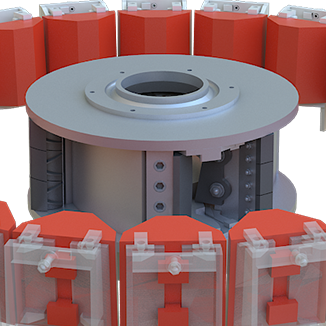
The impact sand-making machine primarily consists of a feeding system, rotor assembly, crushing chamber, main shaft drive system, lubrication system, motor, and base. These components work in concert to crush, grind, and shape the material through high-speed impact and multiple collisions, thereby producing manufactured sand with excellent particle shape.
Its core structure mainly includes:
- Feed mechanism: Responsible for uniformly conveying material into the crushing chamber.
- High-speed rotor assembly: The core component of the equipment, generating powerful centrifugal force through high-speed rotation.
- Ejector (wear-resistant block): Propels material at high speed into the crushing chamber for impact crushing.
- Crushing chamber: Where the material undergoes the “stone-on-stone” or “stone-on-iron” crushing process.
- Peripheral Guard Plates and Liner Plates: Protect the machine body and reduce wear.
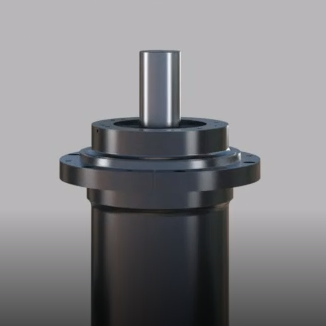
- Main Shaft Assembly: Supports the high-speed, stable operation of the rotor.
- Drive System: Consists of a motor, pulleys, and other components to provide power to the equipment.
- Lubrication System: Ensures long-term, stable bearing operation and extends equipment service life.
- Frame and Base: Support the entire machine structure and ensure operational stability.
The rotor and crushing chamber of modern impact sand-making machines are both flexibly adjustable. This not only improves sand-making efficiency but also enhances the shape of the final product, reduces wear on vulnerable parts, and lowers operating costs. As a result, these machines are widely used in the manufactured sand, mining, building materials, and engineering aggregate industries.
How to Improve the Operational Efficiency of an Impact Sand-Making Machine?
Optimizing various aspects—including material control, equipment configuration, and daily maintenance—can not only improve the operational efficiency of the impact sand-making machine but also increase the output of manufactured sand and enhance overall production efficiency.
The following key factors have the greatest impact on sand-making efficiency:
- Uniform Feeding: Use a variable-frequency feeder to match the sand-making machine’s processing capacity in real time, avoiding erratic feed rates and ensuring stable equipment operation under consistent load.
- Control Feed Size: Oversized material increases equipment load, accelerates wear on vulnerable parts, and reduces efficiency.
- Adjusting Rotor Speed: Adjust the speed according to requirements to achieve optimal crushing results.
- Optimizing the Crushing Chamber and Ejection Structure: Reasonably configure the “stone-on-stone” or “stone-on-iron” modes to improve sand production rates and product quality.
- Integrating a Screening System: Screen out qualified products and return unqualified material for re-crushing to increase overall production capacity.
- Regularly inspect wear parts: Timely replacement of discharge heads, peripheral liners, and wear-resistant liners ensures the equipment remains in optimal operating condition.
- Control material moisture content: Excessive moisture can adversely affect sand production and screening efficiency; implement pre-treatment processes if necessary.
- Perform proper lubrication and maintenance: Regularly inspect bearings, lubrication systems, and transmission components to minimize downtime due to malfunctions.
How to Choose the Right Sand-Making Machine for You?
Choosing a sand-making machine is not only a matter of investment cost but also directly impacts the quality of the finished sand. Companies should conduct a comprehensive assessment based on raw material characteristics, production requirements, finished product standards, and project budgets, rather than simply pursuing low prices or high production capacity.
| Selection Factors | Key Considerations | Recommended Solution |
| Raw Material Type | High-hardness stones (e.g., granite, basalt, river pebbles) | Impact Sand Maker |
| Raw Material Type | Medium-to-low hardness materials (e.g., limestone, coal gangue) | Sand Maker or other cost-effective solutions |
| Output Requirement | 50-100 T/H | Small-to-medium scale sand maker |
| Output Requirement | 100-300 T/H | Medium-to-large scale sand production line |
| Output Requirement | Over 300 T/H | Large-scale VSI sand maker or multi-machine combination |
| Finished Product Requirements | High-quality manufactured sand; strict requirements for grain shape | Impact Sand Maker |
| Investment Budget | Limited initial investment | Cost-effective configuration solution |
| Site Conditions | Fixed production site | Stationary sand production line |
| Site Conditions | Dispersed projects; frequent site relocation | Mobile sand maker |
| Environmental Requirements | Strict dust and noise control | Equip with dust removal and noise reduction systems |
Production Process of a Sand Processing Plant
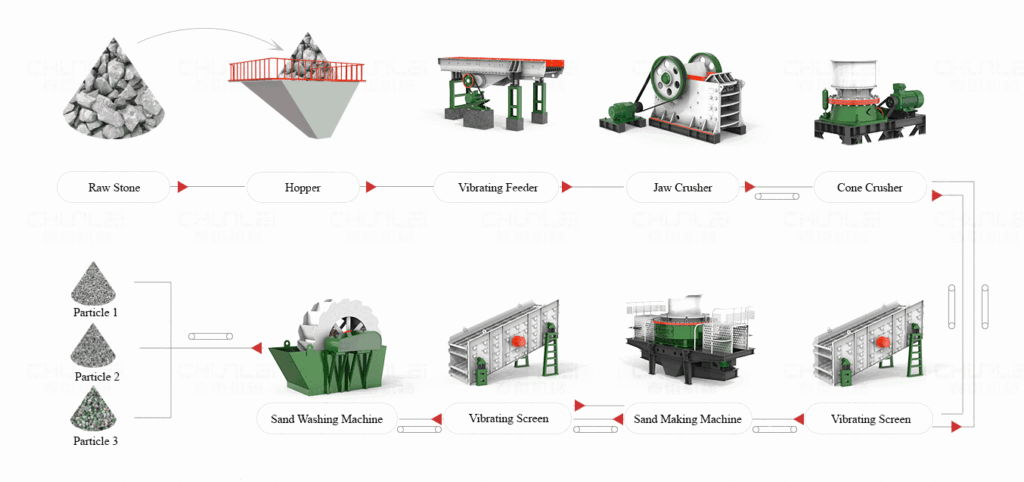
The sand and gravel processing plant employs a three-stage crushing + closed-circuit screening + integrated washing, dewatering, and classification process. Raw stone undergoes multi-stage crushing to produce sand, followed by grading to remove silt and fine sand recovery, resulting in compliant, commercial-grade manufactured sand. Excess coarse material is recycled back into the crushing process, while wastewater is settled, filtered, and reused, ensuring a fully closed-loop, environmentally friendly production process.
- Coarse Crushing: Large rocks are coarsely crushed into smaller pieces using a jaw crusher.
- Medium and Fine Crushing: The smaller pieces are further crushed into finer particles using a cone crusher or impact crusher.
- Sand Making and Shaping: The particles enter an impact sand maker for grinding and shaping, transforming them into sand with rounded grains.
- Screening: The sand is graded using a vibrating screen, and substandard material is returned for re-crushing.
- Sand Washing: The finished sand is conveyed by a belt conveyor to a sand washer for cleaning to remove impurities. The washed sand is then transported via a belt conveyor to the finished product stockpile.
CHUNLEI Selection Recommendations
If your project primarily produces construction sand, high-quality aggregates, or manufactured sand for ready-mix concrete, an impact-type sand maker is the ideal choice. Before finalizing your selection, please provide the following information:
- Raw material type (granite, basalt, river pebbles, etc.)
- Maximum feed size
- Target output (tons per hour)
- Finished product specifications
- On-site power supply conditions
- Project location
CHUNLEI engineers can provide free sand-making machine selection plans, production line configuration recommendations, and equipment quotations based on your actual operating conditions, helping you achieve a higher return on investment. Contact a CHUNLEI engineer today!
How much does a sand-making machine cost?
The price of an impact-type sand-making machine (VSI sand-making machine) typically ranges from $30,000 to over $250,000, depending on the equipment model, production capacity configuration, grade of wear-resistant materials, and whether it is part of a complete sand-making production line system.
Generally, small-scale impact sand making machines are more affordable and suitable for sand and gravel processing projects with lower output requirements; medium- and large-scale equipment, however, features stronger spindle systems, higher-grade wear-resistant materials, and greater processing capacity, resulting in significantly higher prices. If equipped with high-end hydraulic systems, intelligent control systems, or hybrid hydraulic-electric power solutions, the overall cost will also increase accordingly.
Sand-making machines on the market that are priced excessively low often suffer from issues such as poor-quality steel, short service life of the discharge head, excessive vibration, and high long-term maintenance costs. Although the initial investment is lower, the long-term operating costs are actually higher.
CHUNLEI impact sand-making machines offer stable performance, reliable wear-resistant components, and comprehensive after-sales support. They can provide you with lower overall operating costs and higher-quality finished sand, thereby improving your overall return on investment.
Sand Making Machine ordered by Customer
Chunlei Machinery has been engaged in mining machinery manufacturing for more than 30 years, with a wealth of experience in building websites and customer cases, served customers all over the world!


Technical Parameters of Sand Making Machine
| Model | VSI 7611 | VSI 8518 | VSI 9526 | VSI 1140 | VSI 1145 | VSI 1150 | |
| Capacity (t/h) | Cascade & Center Feed | 80-180 | 140-260 | 200-380 | 300-520 | 350-610 | 360-650 |
| Full Center Feed | 40-90 | 70-130 | 100-190 | 160-260 | 180-355 | 190-365 | |
| Maximum feed size (mm) | Soft material | 35 | 40 | 45 | 50 | 50 | 50 |
| Hard material | 30 | 35 | 40 | 40 | 45 | 45 | |
| Rotation speed(r/min) | 1700-1890 | 1520-1690 | 1360-1510 | 1150-1300 | 1150-1300 | 1150-1300 | |
| Motor power(kw) | 4P 110 | 4P 180 | 4P 264 | 4P 400 | 4P 440 | 4P 500 | |
| Length×Width×Height(mm) | 4100×2250×2300 | 4160×2360×2500 | 4540×2500×2830 | 5500×2750×3100 | 5500×2750×3100 | 5500×2750×3100 | |
Sand Making Machine FAQ
Q: How do I choose between an impact crusher and a cone crusher?
A: Impact crushers produce sand with a rounder grain shape and are suitable for medium-hardness materials; cone crushers have higher output and cheaper wear parts, and are suitable for high-hardness materials.
Q: How long do the wear parts last?
A: Approximately 3,000–6,000 hours for soft materials, and about 800–1,500 hours for hard materials (such as granite). We recommend keeping a set of spare parts on hand.
Q: Can the output particle size be adjusted?
A: Yes. This is primarily achieved by adjusting the gap between the impact plate and the rotor; the smaller the gap, the finer the output.
Q: What should I do if the equipment vibrates heavily or the body sways?
A: This is usually caused by rotor imbalance, which results from uneven wear on wear-resistant parts or a clogged impeller. Shut down the machine, inspect it, replace worn parts, and clear any blockages.
Q: Why does the finished sand contain a lot of needle-shaped and flaky particles, and why is there excessive material recirculation?
A: Common causes include severe impeller wear, improper rotational speed, or excessively high material moisture content (over 8%). Replacing wear parts and adjusting the rotational speed will resolve the issue.
Q: What should I do if the bearings are overheating?
A: Check if the lubricating oil is low or degraded, clean out any dust that has entered the bearings, and replace the bearings if necessary.
Q: What should I do if there are unusual noises or metallic clanging sounds during operation?
A: Shut down the machine immediately and check the crushing chamber for non-crushable objects such as metal pieces, or inspect whether internal bolts or liners are loose.
Q: Can it process wet material?
A: Not recommended. Moisture content exceeding 8% can easily cause machine blockages, resulting in a significant drop in efficiency.
Q: Why won’t the motor start after powering on?
A: Check whether the power supply is connected, if the voltage is too low, or if the motor is seized due to excessive load.
Q: Is there a lot of dust? Does it meet environmental standards?
A: When equipped with a sealed feed inlet and a baghouse dust collector, dust control is highly effective and meets environmental requirements.
Summary
The key to a high-yield impact sand-making production line lies in ensuring that “the equipment matches the raw material and the process fits the site.” Only by selecting the right chamber type and rotational speed for the impact sand-making machine, and pairing it with appropriate pre-processing and screening stages, can you produce premium sand that commands a high premium.
Contact us today for a free consultation on selecting the right impact sand-making machine—our technical team will help you build a sand-making production line that delivers “stable output, low costs, and superior finished products,” ensuring sustained profitability.
Related Products —
Thickener
The Thickener, with built-in degassing tank and sawtooth external overflow weir, prevents solid particles from attaching to air bubbles, improves localized suction phenomenon, and substantially increases the sedimentation area; at the same …
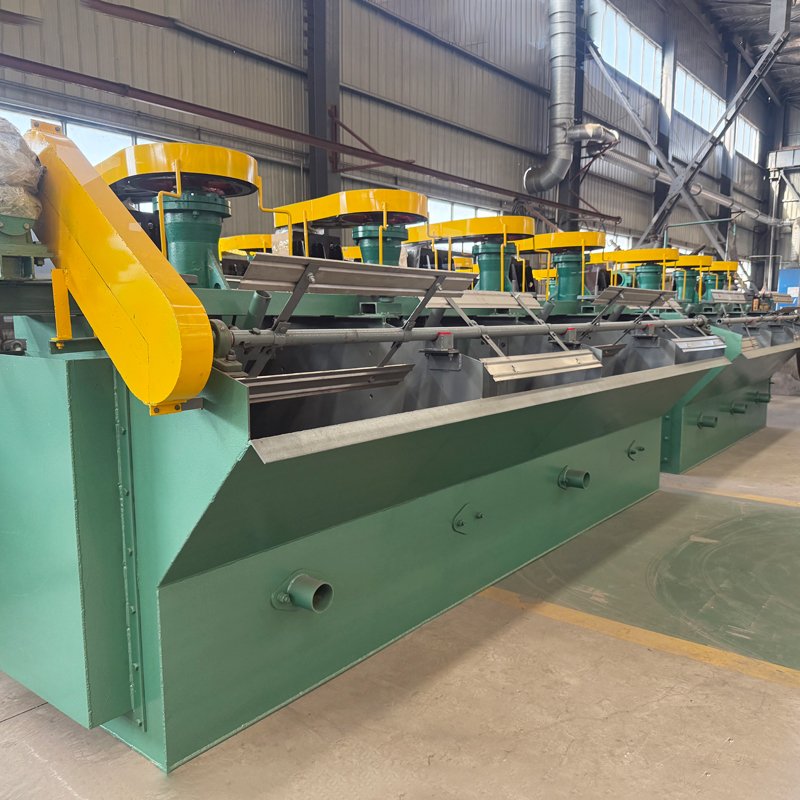
Flotation Machine
Flotation machine is a self-absorbing, self-absorbing pulp type mechanical agitation flotation equipment.It is widely used in the flotation operation of nonferrous metals, black metals and nonmetals. Flotation m…
Shaking Table
The shaking table mainly consists of eight parts: bed head, motor, slope adjuster, bed surface, ore tank, water tank, rifling strip and lubrication system. According to the position of feeding device, shaking table can be divided into right…
Fine Sand Recycling Machine
Fine sand recycling machine is also known as tailing sand recycling machine, fine sand extraction machine, fine sand collection machine, sediment separator, mud separator, sand-water mixture processing system and so on. …
High Gradient Magnetic Separator
A variety of models are available | Get the free price list! The High Gradient Magnetic Separator (HGMS) is a new type of strong magnetic separator developed on the basis of general strong magnetic separa…


loading…
已经是到最后一篇内容了!