 Chunlei Mining Machinery


CJ Jaw Crusher
CJ European Jaw crusher is a kind of stone crusher, which is mainly used for primary or secondary crushing of stone materials. The function of jaw crusher is to crush all kinds of stone materials into smaller sizes for transportation.
- Feed Size:100-1200mm
- Motor Power:5.5-280KW
- Processing capacity:5-700t/h
What is CJ Jaw Crusher?
The European-style jaw crusher (commonly referred to in the industry as the CJ series) is a heavy-duty primary crushing machine that features a comprehensive structural upgrade over the traditional PE series jaw crusher.
Unlike standard PE models that rely on bolted frame assemblies, the CJ series utilizes a one-piece cast steel frame optimized via finite element analysis (FEA). It features a deepened, symmetrical V-shaped crushing chamber, a heavy-duty forged eccentric shaft, and oversized bearings, all complemented by a hydraulic discharge setting adjustment system.
A high-performance European-style jaw crusher engineered specifically for hard ores, granite quarries, and high-capacity aggregate processing plants. It delivers up to a 30% increase in processing capacity, significantly reduces energy consumption per ton of material, and drastically minimizes downtime for maintenance.

CJ52

CJ160

CJ96
CJ European-style Jaw Crusher vs. PE Traditional Jaw Crusher
When selecting equipment for mining operations, many customers struggle to decide between the PE series and the CJ European-style series. The table below compares them based on actual operating conditions to help contractors and mine managers make a quick decision:
| Comparison Item | CJ Series European-style Jaw Crusher | PE Series Traditional Jaw Crusher |
| Equipment Positioning | Heavy-duty primary crushing of hard rock; large-to-medium-scale mining projects | Economical primary crushing; small-to-medium-scale quarries; medium-to-soft stone materials |
| Frame Structure | Monoblock cast steel frame (impact-resistant, low stress); modular design for split transport on large models | Bolted assembly frame; suitable for moderate-impact operating conditions |
| Crushing Chamber | Deep, symmetrical V-shaped chamber; minimizes crushing “dead zones” and reduces the risk of jamming/stalling | Standard shallow V-shaped chamber; prone to material accumulation and clogging when processing hard rock |
| Discharge Adjustment | Hydraulic or heavy-duty wedge adjustment; quick gap adjustment | Shim-based wedge adjustment; adjustment process takes longer |
| Core Components | Thickened forged eccentric shaft; oversized heavy-duty bearings | Standard-specification eccentric shaft and bearings |
| Suitable Materials | High-hardness, highly abrasive rocks (e.g., granite, basalt, iron ore) | Medium-to-low hardness materials (e.g., limestone, common river pebbles) |
| Overall O&M | Longer wear-part lifespan and lower overall failure rate in hard-rock applications | Faster wear on jaw plates and frames; higher frequency of downtime in hard-rock applications |
| Procurement Cost | Higher equipment purchase cost | High cost-performance ratio; lower initial investment |
If your project primarily involves processing hard rock such as granite or basalt, prioritize evaluating the CJ European-style series; if you are mainly processing medium-to-soft materials like limestone and have a limited budget, the PE series will suffice.
Core Structural Components and Engineering Specifications

Every key component of the European-style jaw crusher undergoes precision machining and is constructed from heavy-duty metallurgical materials, ensuring the ability to withstand immense mechanical impact and load-bearing forces.
| Component Name | Core Function | Material Specifications |
| Main Frame | Withstands crushing impact loads; serves as the structural base for the entire machine | One-piece cast steel; modular cast steel components used for large models to facilitate disassembly, transport, and assembly |
| Fixed Jaw Plate & Swing Jaw Plate | Working surfaces that directly crush and grind the ore | High-manganese steel; optional ultra-high-manganese alloy upgrade available for highly abrasive, hard rock applications |
| Heavy-duty Eccentric Shaft | Transmits power and drives the reciprocating motion of the swing jaw | Forged high-carbon alloy steel; enlarged shaft diameter enhances resistance to torsional impact |
| Heavy-duty Bearing Assembly | Supports the rotation of the eccentric shaft | Oversized heavy-duty rolling bearings; labyrinth seals minimize dust ingress |
| Flywheel & Pulley | Stores kinetic energy for crushing and stabilizes operating speed | High-strength cast iron; dynamically balanced to reduce machine vibration |
| Toggle Plate | Transmits crushing force and acts as a mechanical overload protection component | Cast steel; designed to fail first when encountering uncrushable hard objects, thereby protecting the main unit |
| Discharge Adjustment Assembly | Controls the bottom discharge gap | Two configuration options: hydraulic adjustment assembly or heavy-duty wedge assembly |
Working Principle of CJ European Jaw Crusher
The CJ European-style jaw crusher also relies on compression to crush material; however, thanks to design optimizations, it offers superior efficiency when processing hard rock compared to traditional PE jaw crushers. The complete workflow is as follows:
- Feeding: Large raw stones enter the deep V-shaped crushing chamber through the top inlet;
- Power Drive: An electric motor drives a pulley via V-belts, rotating the heavy-duty eccentric shaft and causing the swing jaw to perform a complex reciprocating motion;
- Compression Crushing: The swing jaw periodically moves toward the fixed jaw, subjecting the rock inside the chamber to compression and bending forces, which gradually break down large material; the deep V-chamber design facilitates the downward flow of material under gravity, minimizing dead zones and reducing the risk of machine stalling;
- Discharge: As the swing jaw retracts, the gap opens, allowing crushed stone that meets the required particle size to exit through the bottom discharge opening via gravity;
- Recirculating Crushing: Large material that does not yet meet the size requirements remains in the crushing chamber for further crushing;
- Continuous Production: When paired with a vibrating feeder and belt conveyor, the system enables 24-hour continuous, heavy-duty operation.

Advantages of the CHUNLEI European-style Jaw Crusher
- Powerful feeding capability: Features a deep “V”-shaped crushing chamber with optimized structural geometry and swing-jaw trajectory parameters; the long-stroke design maximizes feed size, throughput, and the crushing ratio.
- High-strength steel toggle plate: Lightweight and easy to replace; it bends rather than shatters under overload conditions, preventing damage to conveyor belts caused by the breakage and falling of traditional cast-iron toggle plates.
- Convenient adjustment: Uses a wedge-based system instead of traditional shims for discharge opening adjustment, allowing for easier, stepless adjustment.
- Extended service life: Replaces rigid mountings with elastic limit blocks and rubber shock-absorption devices, improving the performance of the machine’s dynamic balancing system and extending its service life.
- Convenient transport: The integrated motor mount design reduces the equipment’s installation footprint and ensures more stable power output.


Key Application Scenarios
Our CJ Series European-style jaw crushers are optimized for demanding operational environments:
- Open-pit hard rock mining: Primary crushing of granite, basalt, iron ore, and copper ore to prepare intermediate materials for mineral processing and subsequent crushing stages;
- Large-scale quarry aggregate production: Primary crushing of aggregates for highway and railway infrastructure;
- Construction waste recycling: Primary crushing of large concrete blocks and construction debris;
- Mobile crushing station units: Field operations and projects requiring frequent relocation;
- Industrial raw material crushing: Pre-processing of hard industrial materials such as slag and refractory raw materials.
Ancillary Equipment for the Crushing Production Line
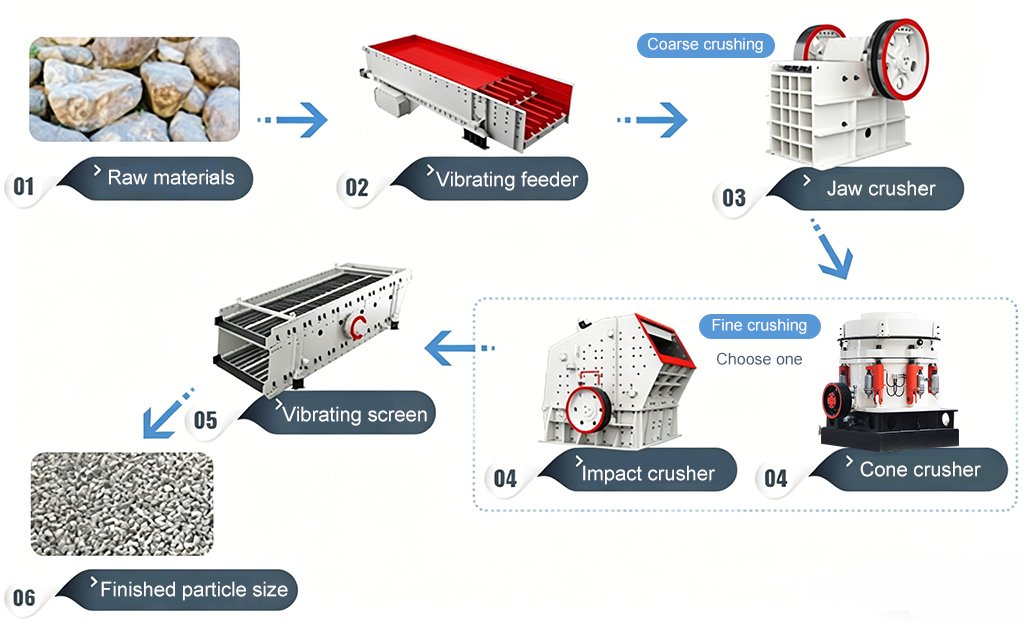
The CJ Series European-style jaw crusher typically does not operate as a standalone unit; a typical equipment list for a complete production line includes:
- Vibrating Feeder: Ensures uniform material feeding, screens out soil and fines, prevents heavy material from violently impacting the main crusher, and avoids clogging or stalling;
- CJ Series European-style Jaw Crusher: Performs primary coarse crushing of large raw material blocks;
- Belt Conveyor: Transports material between pieces of equipment;
- Secondary Crushing Equipment: Cone crusher (preferred for hard rock) or impact crusher (for medium-soft stone) to perform intermediate and fine crushing;
- Vibrating Screen: Grades the finished product and returns oversized particles to the crusher for re-crushing;
- Dust Removal System: Controls dust generated during crushing to protect operators and equipment.
How to Choose the Right Jaw Crusher for Your Mine?
When selecting a European-style jaw crusher, you should not base your decision solely on model size or nominal output. The critical factors to consider are the ore properties, maximum feed size, target throughput, discharge size, and downstream equipment requirements. This is particularly important when processing hard, abrasive materials such as granite, basalt, or iron ore; choosing a crusher that is too small risks overloading, while choosing one that is too large leads to unnecessary investment costs.
- Consider ore properties: For highly abrasive materials like hard rock or iron ore, prioritize equipment structural strength and jaw plate wear resistance.
- Consider feed size: Select an appropriate feed opening based on the actual maximum lump size at the mine to prevent material jamming.
- Consider processing capacity: Choose a model based on actual production requirements while allowing for a reasonable capacity margin.
- Consider discharge requirements: Determine the discharge opening size based on the feed specifications of downstream equipment, such as cone crushers and screening units.
- Consider system compatibility: Ensure the jaw crusher’s capacity matches that of the feeders, conveyors, and downstream crushing equipment.
If you are unsure which specification to choose, please contact CHUNLEI engineers, we can assist you in selecting the most suitable model for your needs.
How to Adjust Discharge Particle Size?
The discharge particle size of the European-style jaw crusher is primarily controlled by adjusting the discharge opening (CSS – Closed Side Setting). A smaller opening yields finer finished product, while a larger opening results in coarser material.
Common adjustment methods include:
- Adjusting the discharge opening gap: Directly adjusting the gap between the swing jaw and the fixed jaw based on the required product size is the most straightforward method.
- Using the adjustment mechanism: Adjustment structures vary by model; always operate the equipment according to the manufacturer’s manual.
- Considering feed size: If the feed particle size fluctuates significantly, the actual discharge size may change even if the discharge opening setting remains constant.
- Implementing a closed-loop system with a vibrating screen: For strict product size requirements, a closed-loop circuit—consisting of the jaw crusher, a vibrating screen, and a return conveyor—can be used to send oversized material back to the crusher for reprocessing.
- Avoiding excessively small settings: Setting the discharge opening too small can increase equipment load, reduce processing capacity, and accelerate the wear of certain consumable parts.
In actual production, it is recommended to make incremental, fine adjustments based on the target product size. If you provide the specific model of the European-style jaw crusher, the feed size, and the target discharge size, I can help you determine the appropriate discharge opening setting.
On-site Maintenance and Troubleshooting Guide
Based on past customer feedback, the following common faults are summarized for reference; please contact the manufacturer’s engineers for major malfunctions.
| Symptom | Common Causes | On-site Remedial Measures |
| Excessive vibration and abnormal noise | Loose anchor or frame bolts; flywheel dynamic imbalance; off-center feed impact | Shut down and tighten all bolts; rebalance flywheel; ensure centered material feeding |
| Significant drop in actual output | Severe jaw plate wear; excessive discharge gap setting; unstable feeding | Inspect and replace high-manganese steel jaw plates; recalibrate discharge gap; service vibrating feeder |
| Material blockage/stalling in crushing chamber | Excessive feed rate; damp/sticky material; inclusion of large, uncrushable debris | Stop feeding, cut power, and clear crushing chamber; adjust feed rate; install upstream iron removal device |
| Abnormal rise in bearing temperature | Insufficient or degraded grease; dust ingress due to damaged bearing seals; incorrect assembly clearance | Replenish or replace with proper grease; service labyrinth seals; re-check bearing assembly clearance |
| Repeated breakage of toggle plate | Prolonged overload operation; frequent entry of hard objects (e.g., iron) into crushing chamber; excessive feed | Install iron removal equipment; strictly control feed particle size; reduce actual equipment load |
Technical Parameters of CJ European Jaw Crusher
| Model | Feed Port Size (mm) | Maximum Feed Particle Size (mm) | Discharge Port Adjustment Range (mm) | Processing Capacity(t/h) | Motor Power(kw) | Overall Dimensions (Length × Width × Height) (mm) |
| CJ96 | 480 | 930×580 | 60-175 | 105-390 | 4P 90 | 2850×2270×1950 |
| CJ106 | 560 | 1060×700 | 70-200 | 150-500 | 4P 110 | 3280×2580×2400 |
| CJ120 | 700 | 1200×870 | 70-200 | 175-610 | 4P 160 | 3700×2790×2950 |
| CJ125 | 760 | 1250×950 | 100-250 | 270-831 | 4P 160 | 4230×2780×2960 |
| CJ150 | 960 | 1400×1200 | 125-250 | 340-880 | 4P 200 | 5030×3440×3970 |
| CJ160 | 960 | 1600×1200 | 150-300 | 430-1145 | 4P 250 | 5780×3460×3580 |
| CJ200 | 1200 | 2000×1500 | 175-300 | 630-1435 | 6P 400 | 6600×4030×4400 |
| CJ1511 | 850 | 1500×1070 | 125-300 | 425-1195 | 6P 200 | 4130×3000×3330 |
| CJ1513 | 1040 | 1500×1300 | 150-300 | 530-1280 | 6P 200 | 4620×2890×4190 |
FAQ
Q1: What is the crushing ratio of the European-style jaw crusher?
A: The crushing ratio depends on factors such as feed size, discharge opening size, material properties, and equipment model; it should be determined based on specific operating conditions.
Q2: Can the European-style jaw crusher operate continuously?
A: Yes, it is suitable for continuous crushing operations, provided there is stable feeding, proper lubrication, and regular inspection, while avoiding prolonged overload operation.
Q3: What are the feed requirements for the European-style jaw crusher?
A: Feed size must be kept within the equipment’s permissible range; feeding should be as uniform as possible to prevent large chunks of material from entering the crushing chamber all at once.
Q4: Why does the European-style jaw crusher experience material clogging?
A: Common causes include excessive feeding, a discharge opening that is too small, high clay content in the material, or an obstructed discharge system; the specific cause should be identified based on on-site conditions.
Q5: Can the European-style jaw crusher process materials with high clay content?
A: It can handle some materials with clay content; however, if the clay content is high, it is generally recommended to add a screening or clay-rock separation stage before crushing to reduce the risk of clogging.
Q6: Can the European-style jaw crusher be used as secondary crushing equipment?
A: Yes, though this depends on the feed size and the target product particle size. In standard aggregate production lines, jaw crushers are typically used for primary (coarse) crushing.
Q7: Why does the noise level increase during the operation of the European-style jaw crusher?
A: It may be due to abnormalities in bearings, fasteners, jaw plates, or other components. If a significant change in noise is detected, the equipment’s operating status should be inspected immediately.
Q8: How do I determine when the jaw plates need replacement?
A: Monitor the wear thickness of the jaw plates and the crushing performance. Replacement should be considered when there is significant wear, a change in discharge particle size, or a drop in processing capacity.
Q9: Can the European-style jaw crusher be configured as a mobile unit?
A: Yes. Depending on project requirements, the jaw crusher can be mounted on a mobile crushing station, making it suitable for operations that require frequent relocation.
Q10: What types of production lines is the European-style jaw crusher suitable for?
A: It is commonly used in applications such as ore crushing, sand and aggregate production, and construction waste processing; it can also be integrated with vibrating feeders, cone crushers, vibrating screens, and conveyors to form a complete crushing production line.
Q11: What is the average service life of the jaw plates (tooth plates) when processing granite?
A: When processing high-silica granite (with a silica content of approximately 65%), high-quality Mn18Cr2 tooth plates typically have a service life of 400 to 800 hours (depending on feed size distribution and CSS settings). Flipping the tooth plates (swapping the top and bottom positions) midway through their wear cycle can extend the total service life by 30%–40%.
Q12: How does the dual-hydraulic wedge adjustment system work?
A: This system eliminates the traditional method of manually inserting or removing shims behind the toggle seat; instead, dual hydraulic cylinders drive two interlocking wedges to move vertically. The movement of the wedges pushes the toggle seat to shift horizontally, allowing for precise adjustment of the closed-side setting (CSS) via the control panel in less than 5 minutes.
Q13: Can the European-style jaw crusher be driven directly by a diesel engine?
A: Yes. For remote mining areas or quarries lacking a stable power grid connection, we can provide units with direct diesel engine drives, or integrate a diesel generator set with the primary crusher onto a single heavy-duty skid frame.
Related Products —
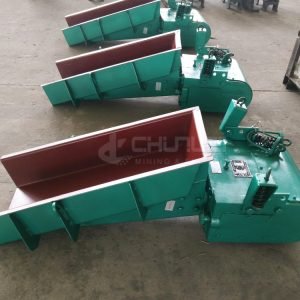
Electromagnetic vibrating feeder
A variety of models are available | Get the free price list! Electromagnetic vibrating feeder is a kind of automated equipment that utilizes electromagnetic vibration principle to drive the continuous, uniform or q…
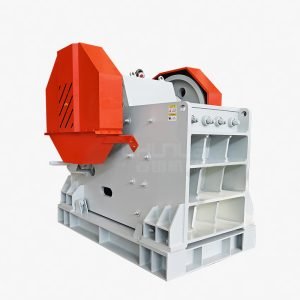
PE/PEX Jaw Crusher
Jaw Crusher is a commonly used ore crushing equipment, widely used in mining, smelting, building materials, highway, railroad, water conservancy and chemical industry and many other industries of the primary crushing equipment, mainly us…
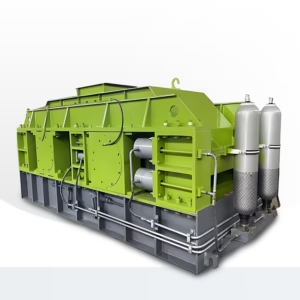
Hydraulic Roll Crusher
Hydraulic roller crushers (also known as hydraulic double roller crushers) are energy-saving medium and fine crushing core equipment in the fields of mining, sand and gravel plants, building materials and solid waste treatment. They are m…
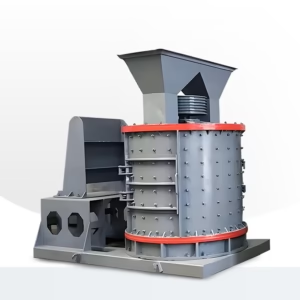
Combination Crusher
Combination Crusher is a new product optimized and designed based on our company’s PEL vertical compound crusher and combined with domestic and foreign fine crushing technology. The vertical compound crusher, also kno…
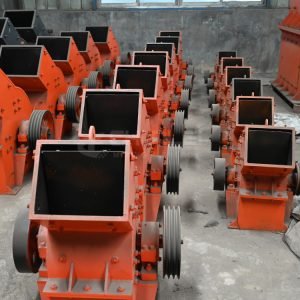
Small Hammer Crusher
A variety of models are available | Get the free price list! Small hammer crusher is a kind of small hammer crusher, which is mainly used for medium and fine crushing of various materials.Hammer crusher can be used…
loading…
已经是到最后一篇内容了!