 Chunlei Mining Machinery


Dewatering Screen
A variety of models are available | Get the free price list!
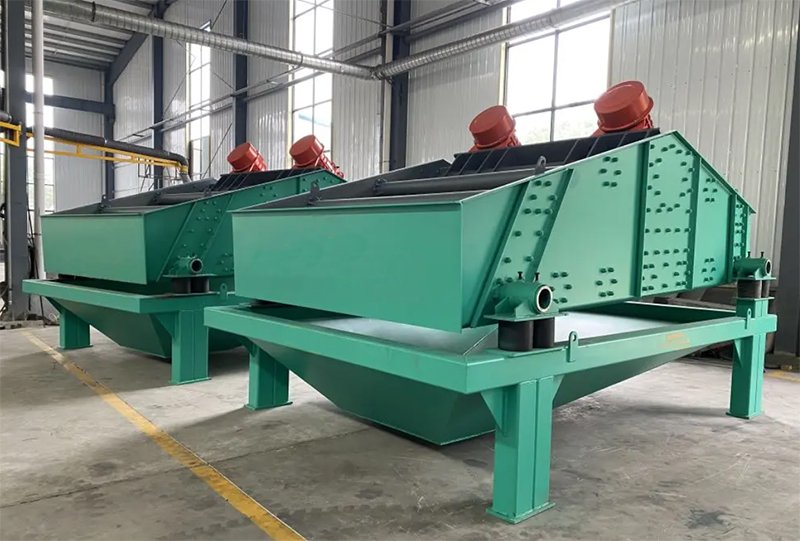
- Dewatering screen is a uniquely designed solid-liquid separation equipment with high capacity, adequate dewatering and commonly used. Spring Thunder Dewatering Screen adopts the way of screen plate side openings, so that part of the water out of the hole quickly, speeding up the dewatering speed, in addition, to avoid the damage caused by water splashing into the motor phenomenon.
- Feed particle size: ≤10mm
- Processing capacity: 10-225t/h
- Applicable materials: It is suitable for medium hardness, soft material, limestone, coal gangue, weathered rock, dolomite and other materials.
What is Dewatering Screen?
A dewatering screen is a vibrating device that uses high-frequency vibration and an inclined screen surface to achieve solid-liquid separation of mineral slurry. It is mainly used for dewatering mineral slurry and sand and gravel materials, and can process high-moisture materials into low-moisture dry materials. This equipment is mainly used for dewatering after flotation in gold mines, copper mines, lead-zinc mines, etc., and can also be used in flotation plants, sand washing production lines, and tailings dry disposal projects.
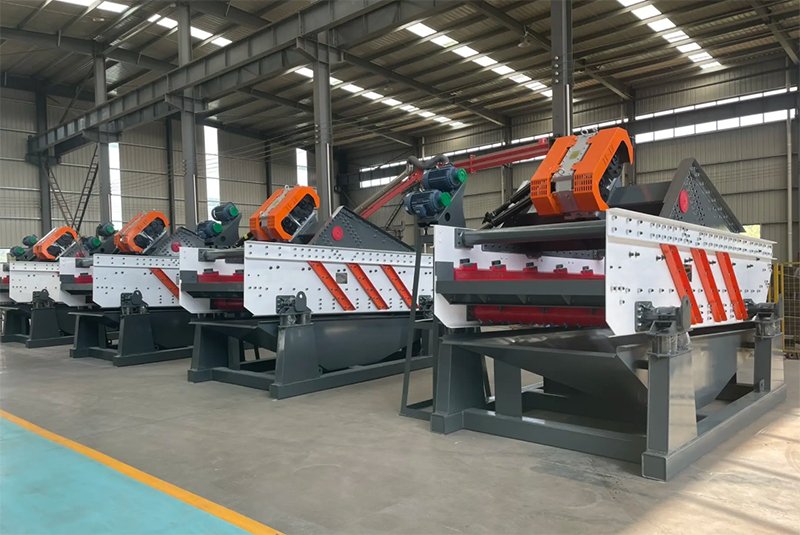
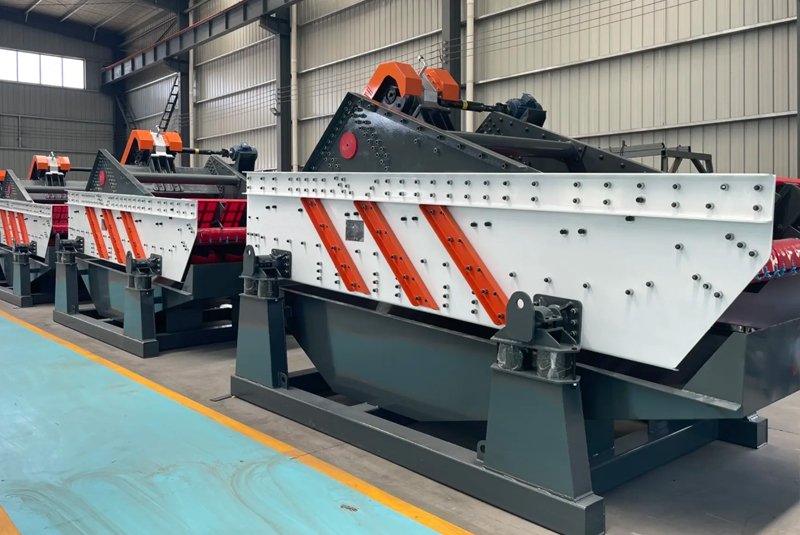
What are the core structural components of a dewatering screen?
A dewatering screen mainly consists of the following parts:
- Screen box: The main body of the equipment, supporting the screen and material.
- Screen (screen plate): Achieves solid-liquid separation, usually made of wear-resistant polyurethane.
- Vibration motor (vibrator): Provides vibration force, improving dewatering efficiency.
- Support springs: Reduce vibration and ensure stable operation of the equipment.
- Frame: Supports the entire machine, ensuring structural stability.
- Feeding and discharging device: Responsible for material entry and discharge after dewatering.
These core components work together to give the dewatering screen advantages such as high dewatering efficiency, stable operation, and convenient maintenance.


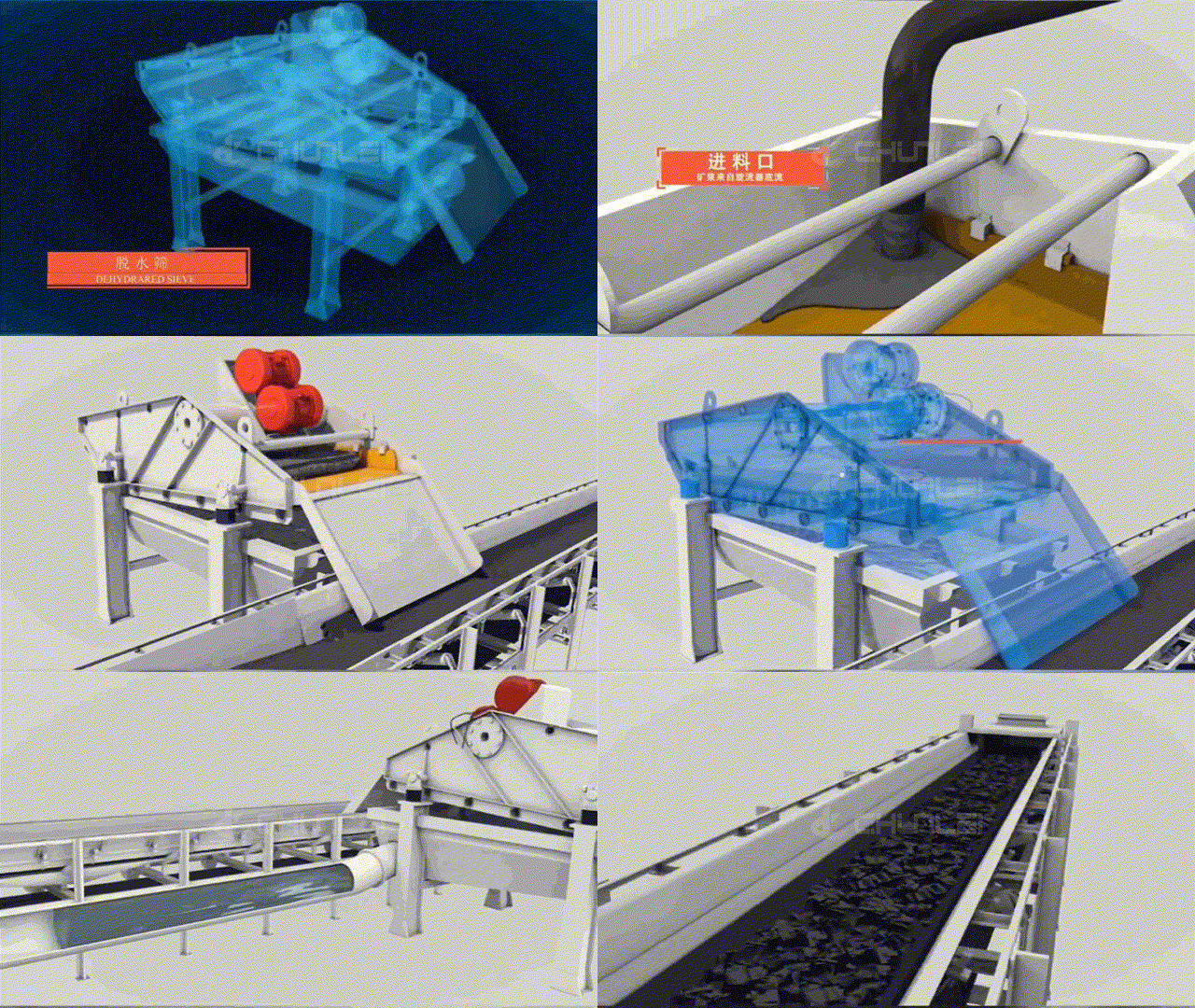
Working Principle of High-Efficiency Dewatering Screens
High-efficiency dewatering screens primarily achieve material dewatering through a combination of high-frequency vibration and screen filtration. When material enters the screen surface, it rapidly stratifies and moves forward under the power generated by the vibrating motor (or exciter). Fine particles and water are discharged through the screen, and the dewatered material is discharged along the screen surface at the outlet end.
During the screening process, the filter layer formed on the screen surface further prevents the loss of fine particles, improving dewatering efficiency and significantly reducing the moisture content of the finished product. With its advantages of good dewatering effect, large processing capacity, and minimal fine sand loss, high-efficiency dewatering screens are widely used in manufactured sand, tailings dry stacking, coal slime recovery, and mineral processing.
Why Choose CHUNLEI Dewatering Screens?
CHUNLEI dewatering screens utilize advanced vibrating screening technology and high-quality wear-resistant components, providing customers with efficient, stable, and low-maintenance dewatering solutions. They are widely used in industries such as manufactured sand, tailings dry stacking, coal slime recovery, and mineral processing.
Advantages of CHUNLEI Dewatering Screens:
- High-Efficiency Dewatering: High-frequency vibration design effectively reduces the moisture content of the finished product, improving product quality.
- Minimum Fine Sand Loss: Optimized screen structure reduces fine particle loss, improving resource utilization.
- High Processing Capacity: Meets different production capacity requirements and is suitable for continuous production operations.
- Long Wear-Resistant Lifespan: Uses polyurethane screen plates and high-quality vibrators, reducing the frequency of replacement of vulnerable parts.
- Stable and Reliable Operation: Robust structure, stable vibration, and low failure rate.
- Simple Maintenance: Modular design makes inspection and daily maintenance more convenient and faster.
- Customized Solutions Support: Can be customized according to material characteristics, processing capacity, and site conditions.
- Comprehensive after-sales service: We provide technical support, installation guidance, and spare parts support to ensure long-term stable operation of the equipment.
Choosing the CHUNLEI dewatering screen improves dewatering efficiency while reducing costs, creating a higher economic return for your project.
What materials are suitable for dewatering with a dewatering screen?
This equipment has a wide range of applications and can process water-containing materials in various industries such as mining, sand and gravel, building materials, and environmental solid waste. Specific categories include:
- Metal mineral processing slurry: various flotation concentrates and tailings from gold, copper, lead-zinc, iron, and manganese ores;
- Sand and gravel aggregates: washed materials such as quartz sand, river sand, manufactured sand, and crushed stone;
- Non-metallic minerals: fine-grained slurries such as kaolin, feldspar, fluorite, and barite;
- Coal industry: dewatering coal slime, washed coal, and coal gangue;
- Environmental solid waste: construction waste slurry, washed slag, and various industrial tailings.
Working condition selection tips: For fine-grained slurries and clay-containing slurries, polyurethane screens are preferred for better anti-clogging performance; for coarse-grained sand and gravel and large tailings, slotted screens can be used to improve permeability and throughput.
Is a dewatering screen suitable for manufactured sand production lines?
Absolutely! It’s a standard downstream device in manufactured sand production lines. It’s primarily used for dewatering and recovering fine sand from washed manufactured sand, effectively reducing the moisture content of the finished sand and improving sand quality.
Using a dewatering screen reduces the moisture content of the manufactured sand to a reasonable range, facilitating transportation, storage, and subsequent use. Simultaneously, the dewatering screen reduces fine sand loss, increasing finished sand output and resource utilization.
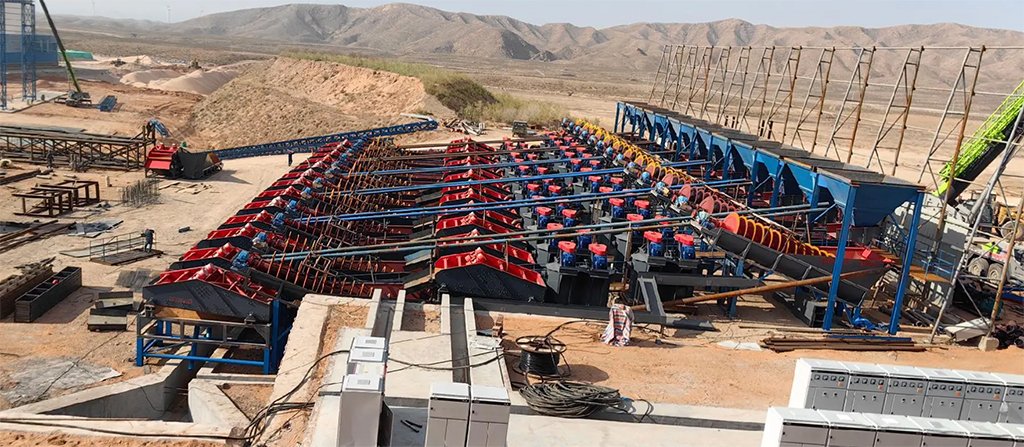
Advantages of a dewatering screen in a manufactured sand production line:
- Reduced moisture content in finished sand, improving product quality
- Reduced fine sand loss, increasing yield
- Improved production line operating efficiency
- Reduced subsequent storage and transportation costs
- Meets high-standard requirements for construction sand
Therefore, for companies pursuing high-quality manufactured sand and stable production, configuring a dewatering screen is an important choice to improve production efficiency.
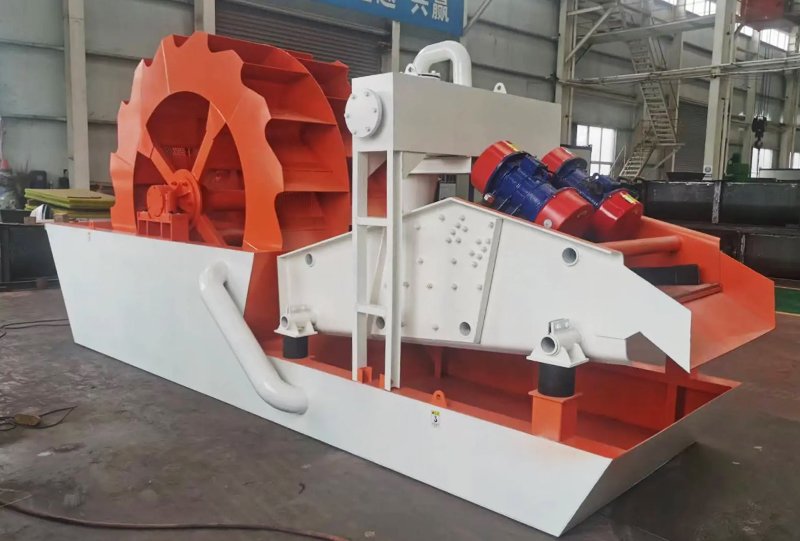
What are the differences between a dewatering screen and a sand washing and recycling integrated machine?
Although both are used in the treatment of sand and gravel and slurry and have dewatering functions, their core positioning, functional combinations, structures, and applicable scenarios differ significantly. The following comparison from multiple dimensions helps you choose the right model for your needs:
| Comparison Dimensions | Dewatering Screen | Fine Sand Recovery System |
| Core Functions | Single-function unit designed primarily for solid-liquid dewatering and sludge removal; does not include washing or fine sand recovery capabilities | Integrated multi-functional unit combining three key functions: water washing and sludge removal, fine sand recovery, and material dewatering |
| Equipment Structure | Simple structure with few components | Complex structure, comprising components such as a sand washing trough, impeller, slurry pump, and hydrocyclone |
| Workflow | Material is fed directly onto the screen, where dewatering is achieved through vibration and gravity | First, the material is washed and de-silted; then, fine sand is recovered via a hydrocyclone; finally, the material undergoes centralized dewatering |
| Key Advantages | Low failure rate, simple operation and maintenance, compact footprint, and low operating costs | Multi-functional design reduces the number of required units and space requirements, with high fine sand recovery rates |
| Applications | Dehydration of mineral processing slurries, coal slurry, and washed sand and gravel | New sand washing lines requiring simultaneous sand washing, fine sand recovery, and dehydration |
| Target Materials | Primarily mineral concentrates, coal slurry, and sand and gravel with low silt content | Primarily high-silt-content manufactured sand and river sand; rarely used for pure mineral slurry |
| Operational Complexity | Few wear parts; easy maintenance | Pumps, impellers, and hydrocyclones are all wear parts; high maintenance workload |
| Investment Costs | Low unit price; low energy consumption | High overall equipment cost; supporting equipment consumes even more energy |
Selection Recommendations: If only material dewatering is required and there is no need for sand washing or fine sand recovery, choose a dewatering screen first; if you need to complete sand washing, fine sand collection, and dewatering in one stop, choose an integrated sand washing and recovery machine.
Are dewatering screens prone to clogging?
Under normal circumstances, dewatering screens are not prone to clogging. Dewatering screens utilize high-frequency vibration, resulting in rapid material movement on the screen surface, effectively reducing fine particle accumulation and screen clogging. Commonly used polyurethane screen plates are characterized by good elasticity, strong wear resistance, and excellent anti-clogging performance, further improving screening efficiency.
However, clogging can still occur when the material has a high mud content, the feed is uneven, or the screen selection is inappropriate. By selecting appropriate screen aperture sizes, controlling the feed concentration, and regularly inspecting and cleaning the screen, the risk of clogging can be effectively reduced, ensuring long-term stable operation of the equipment.
By matching the screen plate material to the material and using auxiliary devices, the problem of screen clogging can be solved at its root, ensuring continuous operation of the equipment.
Can dewatering screens be used for tailings dry disposal?
Yes, dewatering screens are one of the core pieces of equipment in tailings dry disposal systems. Tailings from mining and beneficiation processes often have a high water content. Direct discharge into tailings ponds poses environmental and safety hazards such as leakage and dam failure. Dewatering screens can perform continuous solid-liquid separation of the tailings slurry.
By using dewatering screens in conjunction with equipment such as hydrocyclones and thickeners, dewatering screens can reduce the water content of tailings to a range suitable for transportation and storage, reducing the pressure of tailings pond construction, lowering environmental risks, and improving water resource recovery rates.
Advantages of dewatering screens in tailings dry disposal:
- Effectively reduces tailings moisture content
- Reduces tailings dam construction and management costs
- Improves circulating water recycling rate
- Reduces environmental pollution risks
- Achieves tailings resource utilization and green production
Therefore, dewatering screens are widely used in various tailings dry disposal projects in gold, iron, copper, lead-zinc, and other mines, and are an important piece of equipment for achieving green mine construction.
For ultrafine, highly viscous, and difficult-to-dewater tailings, a combination of dewatering screen and filter press can be used; for conventional mine tailings, dewatering screens can be used alone or in combination with hydrocyclones to achieve low-cost dry disposal.
How to Choose the Right Dewatering Screen Model?
Choosing the right dewatering screen model requires comprehensive consideration of factors such as material type, processing capacity, feed concentration, and target moisture content. Different operating conditions place different demands on equipment specifications and configurations. Appropriate selection can not only improve dewatering efficiency but also reduce operating costs.
When selecting a model, we recommend providing the following information:
- Material type: Is it manufactured sand, tailings, coal slime, or silica sand, etc.?
- Processing capacity: How many tons of material need to be processed per hour?
- Feed particle size and concentration: This data will affect the dewatering effect and the selection of equipment size;
- Target moisture content: Determine the required dewatering efficiency;
- Installation site requirements: Including space dimensions, power supply configuration, etc.
If you are still unsure about the specific model, please feel free to consult CHUNLEI engineers. We will provide customized selection solutions based on your actual operating conditions to ensure the equipment achieves optimal operating results.


How much does a dewatering screen cost?
The price of a dewatering screen is affected by multiple factors, including equipment specifications, processing capacity, material configuration, additional functions, customization requirements, and supporting services. The following are reference prices for overseas trade (main unit only, excluding sea freight, installation, and taxes):
- Small model (5-30 tons/hour): Suitable for small mines, small sand washing plants, and coal slime dewatering scenarios. Standard basic model reference price: US$5,000-10,000.
- Medium model (30-120 tons/hour): Commonly used in mainstream mines, manufactured sand production lines, and conventional tailings dry disposal. Standard configuration reference price: US$10,000-15,000.
- Large model (120 tons/hour and above): Large-scale mineral processing plants, large-scale sand and gravel bases, and high-flow tailings dry disposal projects. Basic model reference price: US$15,000-20,000.
Which parameters affect dewatering efficiency and equipment throughput?
- Vibration parameters: Vibration frequency and amplitude are core indicators. Higher frequency is more suitable for desliming and dewatering fine-grained and viscous materials; larger amplitude results in faster material conveying speed and higher capacity. Parameter imbalance can easily lead to substandard dewatering or material splashing.
- Screen inclination angle: The normal range is 10°-15°. A larger inclination angle results in faster material flow and higher capacity, but insufficient dewatering time and higher moisture content; a smaller inclination angle results in longer material residence time and better dewatering, but lower capacity.
- Screen plate material and screen aperture: Polyurethane screen plates are anti-clogging and wear-resistant, while slotted screens offer excellent water permeability; screen apertures must be strictly matched to the material particle size. Excessively large apertures can cause material leakage, while excessively small apertures can easily cause clogging.
- Feeding conditions: Slurry concentration and feed uniformity affect the overall effect. An ideal operating condition is a concentration of 20%-30% and uniform feeding.
- Material properties: The moisture content, mud content, particle hardness, and viscosity of the material directly determine the final dewatering index and equipment selection.
Technical Parameters of Dewatering Screen
| Model | Minimum 30°% solids volume feed concentration | Single motor power (kW) x quantity (pcs) | ||||||
|---|---|---|---|---|---|---|---|---|
| Fine coal theoretically -0.5+0.1(mm) Specific gravity 1.5 | Coarse sand approximately -5(mm) 100%, -0.6(mm) 50%, specific gravity 2.7 | Fine sand 90% -1(mm) specific gravity 2.7 | 980 (r/min) | 1460 (r/min) | ||||
| 1460 (r/min) | 980 (r/min) | 1460 (r/min) | 980 (r/min) | 1460 (r/min) | 980 (r/min) | |||
| VD6 | 6~8 | 10 ~13 | 14 | 28 | 10 | 21 | 2 ×2 | |
| VD9 | 9~12 | 15 ~20 | 21 | 42 | 16 | 32 | 3×2 | |
| VD12 | 15 ~19 | 24 ~30 | 33 | 67 | 25 | 50 | 2.6×2 | 4×2 |
| VD15 | 30 ~35 | 50 ~60 | 63 | 125 | 47 | 94 | 2.4×4 | 2.25×4 |
| VD18 | 35~45 | 60 ~80 | 77 | 153 | 57 | 115 | 3.7×4 | |
| VD21 | — | 85~100 | — | 225 | — | 164 | 15 | — |
| VD24 | 95~110 | 250 | 190 | |||||
How to Solve Common Problems such as Screen Clogging and Uneven Discharge?
During long-term operation, dewatering screens may experience problems such as screen clogging and uneven discharge. By promptly identifying the causes and taking corresponding measures, equipment performance can be effectively restored, ensuring stable production operation.
Common Problems and Solutions:
Screen Clogging
o Select appropriate screen aperture size, avoiding excessively small apertures;
o Control feed concentration and feeding speed to prevent material accumulation;
o Clean the screen regularly and replace severely worn screen plates promptly;
o For materials with high mud content, add pretreatment or rinsing processes.
Uneven Discharge
o Adjust the feeding device to ensure uniform and continuous feeding;
o Check if the vibration motor or vibrator is working properly;
o Confirm whether the screen is locally worn or damaged, and replace it promptly;
o Check if the spring supports are damaged to prevent abnormal equipment vibration.
Reduced Dewatering Effect
o Check if the screen is clogged or the screen apertures are excessively worn;
o Adjust the vibration frequency and amplitude;
o Control the feed rate to avoid overloading the equipment.
Regular maintenance and proper operation are key to reducing malfunctions and extending equipment life. If persistent abnormalities occur, it is recommended to contact the equipment manufacturer for professional inspection and technical support.
FAQ
Q: What is the difference between a dewatering screen and a vibrating screen?
A: A dewatering screen is mainly used for material dewatering, desliming, and fine sand recovery, employing a high-frequency, low-amplitude vibration design. Ordinary vibrating screens are mainly used for material grading and screening, with limited effect on reducing moisture content.
Q: How long is the lifespan of a dewatering screen mesh?
A: The lifespan of the mesh depends on the material hardness, throughput, and screen material. Generally, polyurethane screens can be used for 3–12 months, with wear resistance far exceeding that of ordinary metal screens.
Q: How much can a dewatering screen reduce the moisture content of materials?
A: Dewatering screens can typically reduce the moisture content of manufactured sand to 10%–15%, and the moisture content of tailings to 15%–20%, with specific values depending on material characteristics and process conditions.
Q: Is a dewatering screen suitable for 24-hour continuous operation?
A: Yes. The dewatering screen adopts a high-strength screen box and a stable vibration system design, meeting the continuous production needs of mines, sand and gravel plants, etc.
Q: Is the dewatering screen energy-intensive?
A: The dewatering screen uses high-frequency vibration technology, resulting in lower overall energy consumption. Compared to traditional dewatering methods, it reduces operating costs while maintaining dewatering effectiveness.
Q: What equipment is needed to use with the dewatering screen?
A: The dewatering screen is typically used in conjunction with a sand washing machine, hydrocyclone, thickener, or fine sand recovery system to achieve better dewatering and fine sand recovery results.
Q: Can the dewatering screen be customized?
A: Yes. Screen size, processing capacity, screen material, motor brand, and installation method can all be customized according to customer needs.
Q: What factors affect the dewatering effect of the dewatering screen?
A: Material particle size distribution, feed concentration, feed rate, screen aperture, and vibration parameters all affect the final dewatering effect.
Q: Is the dewatering screen difficult to install?
A: Not difficult. The dewatering screen has a compact structure and is easy to install. Most units can be put into production after simple debugging.
Q: What parameters are required when purchasing a dewatering screen?
A: We recommend providing the material name, processing capacity, feed concentration, target moisture content, feed particle size, and project location to obtain an accurate selection plan and quotation.
Q: What is the standard moisture content of the material after dewatering?
A: The optimal moisture content for gold and copper concentrates is 8%-15%; tailings dry discharge requires a moisture content ≤20%; the moisture content of finished manufactured sand is generally controlled within 8%.
Q: Can it handle acidic corrosive slurries?
A: Yes, stainless steel frames, acid-resistant screens, and other corrosion-resistant configurations can be customized, which will increase the price.
Q: What is the minimum processing capacity of the equipment?
A: The minimum processing capacity is 5 tons/hour, suitable for small mines; large models can reach 500 tons/hour or more.
Summary
The key to selecting a dewatering screen is matching the equipment specifications, screen plate material, and operating parameters based on the hourly processing capacity, slurry particle size, mud content, and moisture content. CHUNLEI boasts years of experience, mature customization solutions, and a comprehensive global service system, providing cost-effective dewatering equipment for users with diverse operating conditions. When purchasing, don’t just compare unit prices; comprehensively consider the equipment’s quality, energy consumption, maintenance, after-sales service, and other full-cycle costs.
You can send mineral/sand samples to our laboratory, and we will test various indicators free of charge and provide a customized equipment solution and accurate quotation. Inquire now for free dewatering screen selection and quotation services.
Related Products —
Jigging Separator
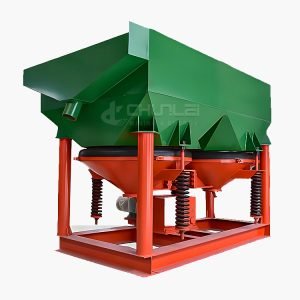
Jigging separator is a heavy separation equipment that utilizes the different settling speeds of minerals in the vertical alternating water flow to achieve the separation of light and heavy minerals. Jigging Separator…
Flotation Machine
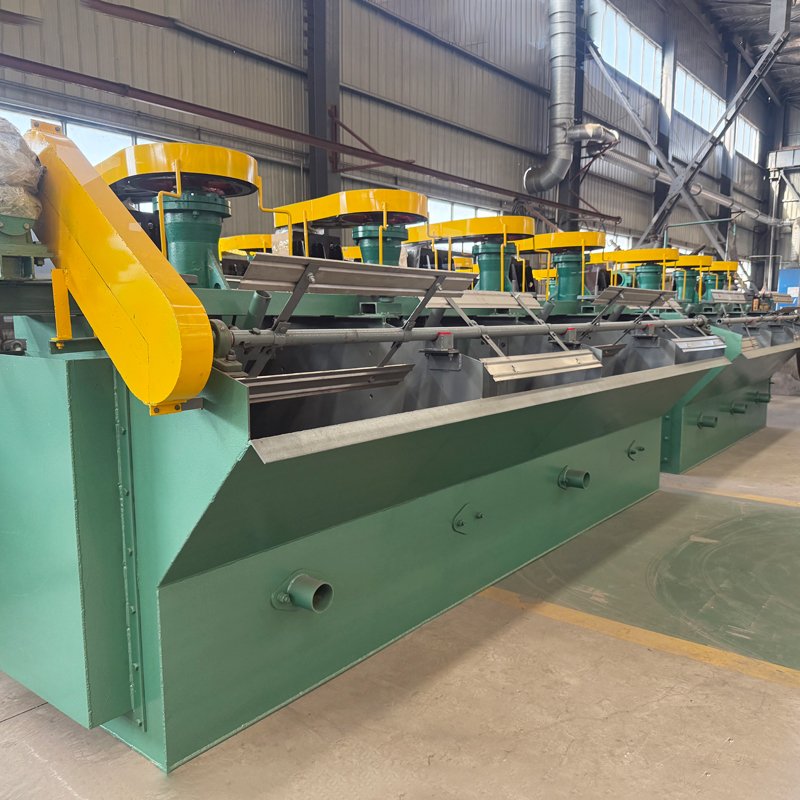
Flotation machine is a self-absorbing, self-absorbing pulp type mechanical agitation flotation equipment.It is widely used in the flotation operation of nonferrous metals, black metals and nonmetals. Flotation m…
Ceramic Filter Press
Ceramic Filter Press is a kind of high-efficiency and energy-saving filtration equipment relying on vacuum suction and capillary action to realize solid-liquid separation, which is widely used in mining, metallurgy, chemical industry, en…
Shaftless Tumbler Screen
The shaftless tumbler screen is a classification device that operates by rotating a cylindrical drum without a central shaft; the drum is supported by rubber wheels, eliminating the need for a central drive shaft or …
Thickener
The Thickener, with built-in degassing tank and sawtooth external overflow weir, prevents solid particles from attaching to air bubbles, improves localized suction phenomenon, and substantially increases the sedimentation area; at the same …

loading…
已经是到最后一篇内容了!